The 72-hour emergency kit: a simple guide for UK families
Kit basicsby Rebecca· 6 September 2026 · 8 min read
It is Friday evening in February. The wind has been building all afternoon. You are halfway through making tea when the lights go off, the boiler clicks into silence, and the whole street goes dark at the same time.
Your first thought is the torch. Your second thought is where the torch is.
This is the situation almost every UK emergency kit is really designed for. Not the end of the world. A storm, a substation, and a few days of ordinary life being much harder than usual.
What “72 hours” actually means
The government's Prepare guidance asks households to think about what they would need if normal services were disrupted for a few days. It does not hand you a shopping list with quantities on it. That is deliberate, because a couple in a flat and a family of five with a dog need very different things.
Three days has become the standard planning figure for a good reason. It is roughly how long it can take for power to be restored to harder-hit areas after a major storm, for a burst main to be fixed, or for a road to be cleared. It is also short enough to be achievable — most families can put together three days of supplies without a big spend or a spare room.
So 72 hours is not a prediction. It is a sensible starting point that covers the overwhelming majority of UK disruption.
Water: do the sum for your own family
This is the part most guides get lazy about, so here is the honest version. There is no single correct figure, because emergencies vary. The World Health Organisation minimum is 2.5 to 3 litres of drinking water per person per day for survival, while around 10 litres per person per day is what you would need to be genuinely comfortable, because that covers basic cooking and washing too.
For a family of four across three days, that gives you two numbers:
- Survival minimum: about 36 litres — roughly eighteen 2-litre bottles, or two large supermarket packs.
- Comfortable: 120 litres. That is a lot of bottles and a lot of cupboard.
Most families land somewhere sensible in between. Store the 36 litres of drinking water properly, then plan to top up washing and flushing water from other sources if you need to. Filling the bath and every large pan the moment you get a warning is a habit worth having.
You will need extra on top if anyone in the house uses formula, if someone relies on a medical device that needs water, or if you have pets.
What we keep for water:
Affiliate links — we may earn a small commission, at no extra cost to you.
Food: three days you don't have to cook
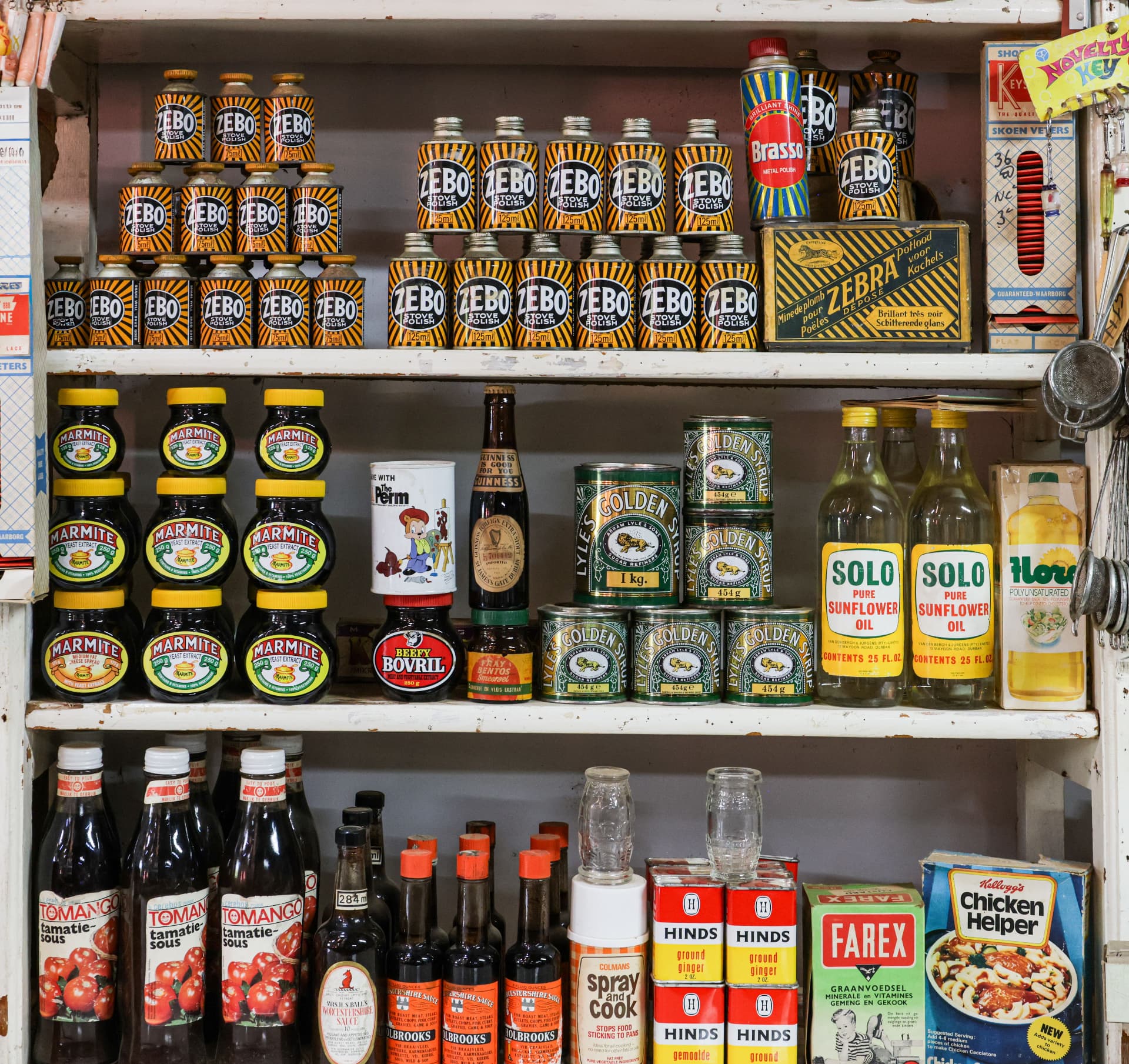
The rule is simple. Assume you have no oven, no hob, no microwave and no fridge. That points you towards tinned food, jars, packets and long-life items that are fine cold or barely warmed: tinned beans, soup, fish, fruit, rice pudding, crackers, peanut butter, cereal bars and long-life milk. Nothing gourmet, nothing that needs twenty minutes of simmering.
Two things people forget:
- A manual tin opener. An electric one is decoration during a power cut.
- Food your family will actually eat. A cupboard of chickpeas is not much use if nobody in the house likes chickpeas, and a stressful evening is the worst possible time to introduce new food to a five-year-old.
Buy the tinned versions of things you already cook with, then eat them and replace them every few months so nothing goes out of date at the back of a cupboard. If anyone in your house is coeliac, dairy-free, vegetarian or has allergies, build the kit around that from the start rather than treating it as an afterthought.
Store-cupboard basics that keep:
Affiliate links — we may earn a small commission, at no extra cost to you.
Light: torches, not candles
The official advice is specific here. It recommends a battery or wind-up torch, and says plainly that torches are safer than candles. Candles cause house fires, and a house fire during a power cut, in the dark, with children in the house, is a genuinely bad night. A wind-up torch never runs out and never needs batteries you have forgotten to buy.
Aim for one torch per person, plus a lantern or two for the room everyone ends up sitting in. Children handle a power cut far better when they have their own torch — it turns the situation from something happening to them into something they are equipped for. Keep spare batteries with the torches, not in a drawer three rooms away.
What we'd put in the trolley:
Affiliate links — we may earn a small commission, at no extra cost to you.
Information: how you find out what is going on
When the power goes, so does the wifi. Your phone will work until the battery does, and the mast may be affected too. A wind-up or battery radio is the item people skip and then wish they had — local radio is where you get told what has happened and when it is likely to be fixed.
Write these down on paper and keep them with the kit:
- The power cut number: 105 in England, Scotland and Wales, 03457 643643 in Northern Ireland
- Your water company
- Your GP surgery and any regular medication your family takes
- Two or three people you would want to contact
- School and insurance numbers
- The frequency of your local radio station
Written down means written down. If it only exists in your phone, it does not exist. A charged power bank buys you another day or two of phone — charge it when you charge the Christmas lights, twice a year.
What we'd put in the trolley:
Affiliate links — we may earn a small commission, at no extra cost to you.
Warmth, first aid and the boring essentials
Heating usually depends on electricity, even if you have gas. Layers, blankets and a hot water bottle you can fill from a camping stove or a kettle on a gas hob go a long way. Your first aid kit should cover plasters, bandages, dressings, gloves, antiseptic, a thermometer, tweezers and pain relief. Then add the things specific to your household: prescription medication, spare glasses, inhalers, and a written list of what everyone takes and the dose.
When the water is off, hand sanitiser and wet wipes stop a difficult few days becoming an unpleasant one.
What we'd put in the trolley:
Affiliate links — we may earn a small commission, at no extra cost to you.
The bit nobody puts on the list
Three days is a long time with bored children and no screens. A pack of cards, a couple of board games, a book each, and some paper and pens. It costs almost nothing and it is the difference between a memorable adventure and three days of misery. Ask any parent who has been through a long power cut which item they were most grateful for.
What we'd put in the trolley:
Affiliate links — we may earn a small commission, at no extra cost to you.
What you can skip
You do not need freeze-dried rations, a generator, a water filter designed for river water, or anything described as tactical. Those are answers to problems the UK does not typically have.
You also do not need to buy everything this weekend. The guidance itself suggests building your kit gradually if buying it all at once would be expensive. Add two or three items to the weekly shop and you will have a complete kit within a couple of months for very little noticeable outlay.
Where to keep it
One place, everyone knows where it is, reachable in the dark. Under the stairs, in a hall cupboard, or in a lidded plastic box in a utility room. Not the loft, not the shed, not the garage you have to walk outside to reach in a storm.
Tell everyone in the house where it lives. A kit that only you can find is only half a kit.
What we'd put in the trolley:
Affiliate links — we may earn a small commission, at no extra cost to you.
Build your family's list in two minutes
Every family's 72 hours looks slightly different — the number of people, their ages, whether there is a baby or a dog, and what people can and cannot eat. Our kit builder does the maths for you. Put in your household and it will give you a complete list sized to your family, so you are not working out water volumes on the back of an envelope on a Friday night in February.
Get a checklist sized to your household.
Build your family's kit list →