How to build a family emergency binder — one page at a time
Emergency binderby Rebecca· 8 October 2026 · 7 min read
I like a plan that still works when the Wi-Fi does not. Not a complicated system or a folder full of things nobody will ever read. Just the useful bits, in one place, so we are not trying to remember a phone number or find the insurance details while also reassuring the children.
That is what I mean by a family emergency binder. You might call yours a home emergency folder. It is somewhere to keep your contacts, a few practical action plans and a record of what you already have. A bit of ordinary household organisation, rather than another thing to worry about.
I would build it one page at a time. Below, I have linked to the power cut, winter storm and flood printables we have so far, along with the guides and kit builder that can help you fill in the rest. You do not need a finished binder before it starts being useful.
Start with a folder you already own
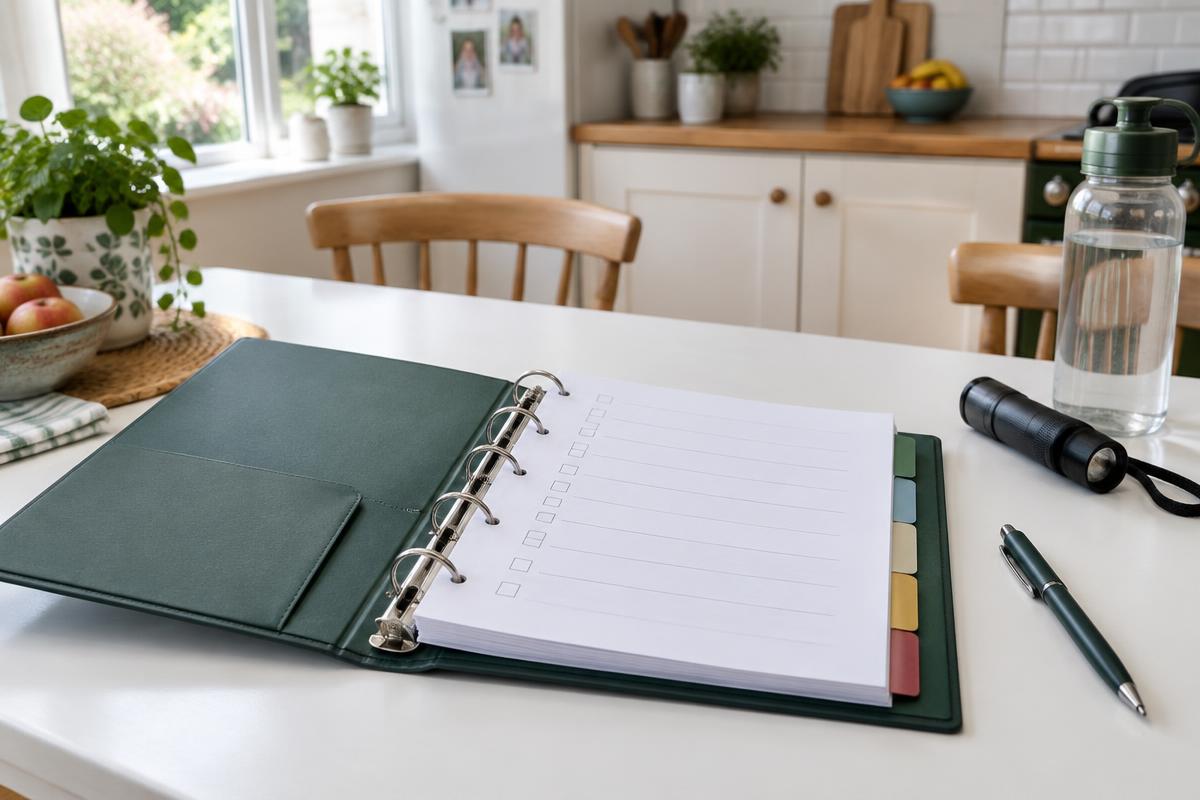
An A4 ring binder, a document wallet or a simple folder will do. I would add a few dividers, some clear sleeves and a pen, but there is no special equipment list to complete first. Spare paper is perfectly good for the pages you want to write yourself.
The important thing is that the information is easy to find. Put the most useful page at the front, use clear headings and leave out anything that makes the folder harder to use. A small, readable binder is more helpful than a beautifully organised one that nobody wants to open.
Only if you need them — an existing folder works just as well:
Affiliate links — we may earn a small commission, at no extra cost to you.
Section 1: the details you need in a hurry
I would make the first page a household quick-reference sheet. Imagine someone helping your family who does not know where anything is kept. What would they need to know?
- Your home address, household members and an out-of-area contact who can pass on updates.
- Important phone numbers: emergency services, your GP, vet, council, utility suppliers and home insurer.
- Your insurance policy number and any relevant support or priority-service details.
- Where the water stopcock, electricity consumer unit and gas shut-off valve are, with safe instructions for the adults who may need them.
- Where you could stay if you had to leave home, and what help anyone in the household would need.
For immediate danger, call 999. Put the right local numbers on your own sheet too: for example, the power cut number is 105 in Great Britain, while Northern Ireland uses NIE Networks on 03457 643 643. It is much easier to check these now than in the middle of a disruption.
Section 2: your printable action plans
This is the section I would reach for when something actually happens. Each sheet gives you a short plan to follow and space for your own household details. Read the accompanying guide first, then download the printable, fill it in and put it behind its divider.
Power cut: when the lights go out
A place to start when you need to check what has happened, find your lighting, keep the fridge shut and get everyone comfortable. Write down where the torches and spare batteries actually live, rather than where you think they probably live.
Read the guide and get the free printable in What to do in a power cut.
Winter storm: when getting out becomes difficult
This sheet covers getting ready before the weather arrives, keeping warm and looking after the house if you are snowed in. Add your local council contact, school-closure information and the details of anyone nearby you want to check on.
Read the guide and get the free printable in Winter storm & snowed-in protocol.
Flood: people and pets first
The flood plan helps you understand warnings, gather essentials and prepare to leave safely. I would fill in your safe destination and utility locations before putting it away. Your family's safety always comes before finishing a checklist or protecting belongings.
Read the guide and get the free printable in Family flood action plan.
Those are the three downloadable action plans available so far. You can get each PDF from its guide after entering your first name and email; access is immediate in the browser, not sent by email. The optional marketing checkbox is separate from getting your printable.
Section 3: the people and pets in your household
A generic checklist cannot know what matters to your family. I would use a simple page for essential medicines, allergies, care needs and practical routines, including anything that would help a trusted relative support you.
- Current medicines and the contact details of the prescriber or pharmacy; check any medical instructions with a healthcare professional.
- Allergies, dietary requirements and equipment someone relies on.
- Children's school or childcare contacts and the agreed arrangements for collection.
- Pet medication, vet details, microchip information and someone who could help care for them.
Keep this section factual and up to date. It is a reference sheet, not a replacement for professional medical advice or a reason to change someone's medicines.
For the animal members of the family, start with our pet emergency kit guide.
Section 4: what you have, where it is and when to check it
This is where the binder and your physical kit meet. I would keep a short equipment list and a separate food-and-water record. You are not aiming for a stockroom inventory. You just want to avoid buying things twice or discovering that an essential has run out.
- Equipment: item, quantity, where it is kept and any battery or maintenance check.
- Food and water: item, quantity, best-before or use-by date, and when you checked it.
- First aid supplies: what is in the kit and any expiry dates that need attention.
- A review date, so changes in medicines, contacts and family needs do not get forgotten.
You can write these pages yourself for now. The kit builder also gives you a printable shopping checklist: choose your household, mark what you already have or do not need, then print the remaining list. Use that for shopping, and your own inventory for recording what is already at home.
For a simple starting point, read the 72-hour emergency kit guide.
For the water section, use how much water to store for an emergency.
If you are choosing lighting, read our guide to torches for a power cut.
Before adding candles to the plan, read why I prefer safer lighting in a power cut.
Keep your binder and grab bag connected
The binder holds information; the grab bag holds the things you might need to take. I would keep a short copy of the essential contacts and action pages with the bag, without loading it with unnecessary paperwork or sensitive originals.
For what to pack, read the family emergency grab bag guide.
If you also keep supplies in the car, use the UK car emergency kit guide.
Make it a household habit, not another project
Choose a known place for the folder, tell the other adults where it is and have a quick look through it together. Show children the simple things that are appropriate for their age, such as who to ask for help and where the family would meet. Utility controls are for adults, not a task for children.
I would check the binder alongside the kit every six months, and sooner when a phone number, medicine or household routine changes. Cross out old information clearly, rotate supplies according to their labels and put the folder back in its usual place.
For the wider official advice behind practical household preparation, read our guide to the UK government's Prepare campaign.
If you want the weather background as well as the action plans, read what El Niño could mean for UK winter weather.
Your first page is enough for today
If the whole folder still feels like a lot, start with the contacts page and one printable. Add your details, put them somewhere sensible and tell someone where they are. That is already a useful family emergency binder.
You can add the rest when you have time. The point is not to think about emergencies all day. It is to do a little calm preparation, then get back to ordinary family life knowing the useful information is there if you need it.
Find this guide and all three printable action plans together in the Emergency binder collection.